
Memorizing the Quran is a noble and deeply meaningful journey. For many Muslims, becoming a Hafiz is a lifelong goal. But if you are just starting, the idea of memorizing the entire Quran can feel difficult.
You may wonder:
- How many verses should I memorize each day?
- How should I revise what I already learned?
- Do I need to know Tajweed first?
- How long will Hifz take?
- Can adults memorize the Quran?
- Can I memorize the Quran while studying or working?
The good news is that you do not need to memorize everything at once. A successful Hifz journey is built through consistent memorization, regular revision, correct recitation, patience, and guidance from a qualified Quran teacher.
Taqi Academy’s Complete Hifz Program follows a structured approach that includes daily memorization, revision, Tajweed application, teacher feedback, oral assessments, and progress tracking. The academy also offers a Part-Time Hifz option for learners who need a more flexible schedule.This guide explains how beginners can approach Quran memorization step by step.
What is Hifz?
Hifz means memorizing the Quran. A person who memorizes the entire Quran is commonly called a Hafiz for a male or Hafiza for a female. Quran memorization is more than simply remembering words. A learner needs to preserve the correct order of verses, pronunciation, Tajweed, and accurate recitation.
That is why a good Hifz plan should include two things:
New memorization + regular revision
Learning new verses without revising older portions can make it difficult to retain what you have already memorized. Taqi Academy’s Complete Hifz Program includes daily memorization and revision, along with regular oral tests and progress assessment.
Can a Beginner Memorize the Quran?
Yes. A beginner can start a Hifz journey, but the right starting point depends on their Quran reading ability. If you can already read the Quran with reasonable accuracy, you may be ready to begin memorization. If you still struggle with Arabic letters, basic reading, or pronunciation, it is better to strengthen those skills first.
Taqi Academy currently recommends different courses based on a learner’s level. Students who cannot recognize Arabic letters are directed toward Noorani Qaida, while learners who can read but need better pronunciation can study Quran Reading with Tajweed. Students who want to memorize the Quran can then choose a Complete Hifz or Part-Time Hifz program. If you are still building your reading foundation, you can start with Noorani Qaida and Basic Quran Reading before beginning a full Hifz plan.
Step 1: Make Your Intention Clear
Before creating a memorization schedule, take time to understand why you want to memorize the Quran. Hifz requires patience. There will be days when memorization feels easy and days when it feels difficult. A clear intention can help you stay committed when your progress feels slow. Do not make speed your only goal. Your goal should be to memorize carefully, recite correctly, and retain what you learn. Quran memorization is a long-term commitment, so build your plan around consistency rather than pressure.
Step 2: Check Your Quran Reading Level
Before starting serious memorization, assess your current reading ability.
Ask yourself:
- Can I read Arabic letters correctly?
- Can I read connected Arabic words?
- Do I understand basic vowel signs?
- Can I recognize Sukun and Shaddah?
- Do I know basic Tajweed?
- Can I read a short Surah without frequent mistakes?
- Can I pronounce difficult Arabic letters correctly?
If the answer to several of these questions is no, spend some time improving your Quran reading first. This is important because memorizing an incorrectly pronounced verse can create a difficult habit to correct later. Taqi Academy’s Quran Reading with Tajweed course focuses on Makharij, Sifaat, Tajweed rules, practical recitation, oral assessment, and teacher correction.
Step 3: Learn Basic Tajweed
You do not need to become an expert in every Tajweed rule before starting Hifz. However, you should have enough knowledge to read the Quran correctly.
Important areas include:
- Makharij
- Sifaat
- Noon Sakinah and Tanween
- Meem Sakinah
- Qalqalah
- Madd
- Ghunnah
- Tafkheem
- Tarqeeq
- Waqf and Ibtida
Tajweed should be applied while memorizing, not treated as a separate subject that you will learn later. Taqi Academy’s Hifz program specifically integrates Tajweed into the memorization process and emphasizes proper pronunciation from the beginning.
Step 4: Choose a Realistic Daily Goal
One of the biggest mistakes beginners make is setting a goal that is too large. You may feel motivated on the first day and try to memorize a large number of verses. But Hifz is a long journey. A smaller goal that you can maintain every day is often more useful than a large goal that you cannot maintain.
For example, your teacher may suggest:
- A few lines per day
- Half a page per day
- One page per day
The right amount depends on your reading ability, age, available time, memory, and revision needs. Do not copy another student’s schedule without considering your own situation.
Step 5: Choose a Fixed Time for Hifz
A regular schedule makes memorization easier. Choose a time when your mind is calm and you are less likely to be interrupted. Many students prefer practicing early in the day, while others may have more time later. The exact time is less important than consistency.
Try to create a routine such as:
Memorization → Revision → Recitation
If you study at the same time each day, Hifz can gradually become part of your daily routine.
Step 6: Start With a Small Portion
Never feel that you have to memorize a large section on your first day. Start with a manageable portion. Read it several times while looking at the Mushaf. Then try to recite it without looking. If you make mistakes, look back at the Mushaf and correct them. Repeat the process until the portion becomes stable.
A useful method is:
Read → Listen → Repeat → Recite → Check
Taqi Academy’s Hifz curriculum recommends dividing the Quran into smaller portions and combining new memorization with revision.
Step 7: Understand What You Are Memorizing
Understanding the meaning of the verses can help you stay connected to what you are learning. You do not need to become a scholar before memorizing the Quran. But learning the basic meaning and context of what you are memorizing can make the verses easier to remember and reflect upon. For deeper study, Taqi Academy also offers a Quran Translation & Tafseer Course for learners who want to understand the Quran’s meaning and explanation. Remember that memorization and Tafseer are different areas of study. A teacher or qualified scholar should be consulted when you have questions about interpretation or religious rulings.
Step 8: Listen Before Memorizing
Listening to a reliable Quran recitation can help you become familiar with the pronunciation, rhythm, and flow of the verses. Before memorizing a new passage:
- Listen to the passage.
- Follow the words in your Mushaf.
- Read the passage yourself.
- Repeat it several times.
- Start memorizing.
Listening should support your learning, but it should not replace teacher correction. A skilled reciter may read correctly while a beginner may unknowingly copy a pronunciation mistake if they do not understand the rule.
Step 9: Use the Same Mushaf
Using the same Mushaf during your Hifz journey can help you remember where verses appear on the page. You may start to remember that a particular verse is near the top, middle, or bottom of a page. This visual memory can support your recall. Try to avoid changing between different page layouts without a good reason. The important thing is to choose a Mushaf that is suitable for your learning and use it consistently.
Step 10: Repeat the New Portion
Repetition is one of the most important parts of Quran memorization. Read the new portion several times while looking at the Mushaf. Then recite it without looking. If you forget a word, check the Mushaf. Then repeat the full passage again. Do not only repeat the verse you forgot. Read the surrounding verses too. This helps you connect the verses together.
Step 11: Connect the Verses
Memorizing individual verses is not enough. You also need to learn how one verse connects to the next. After memorizing two or three verses separately, recite them together.
For example:
Verse 1 → Verse 2
Then:
Verse 1 → Verse 2 → Verse 3
Continue building the chain as you add new verses. This can reduce the chance of stopping between verses because you cannot remember what comes next.
Step 12: Revise Every Day
Revision is just as important as new memorization. A common mistake is spending all your study time on new verses while ignoring old portions. Over time, forgotten verses can build up.
A better routine is:
Old Hifz → New Hifz → Old Hifz again
Your teacher can help decide how much revision you need based on your memorized portion. Taqi Academy’s Complete Hifz Program includes daily revision, weekly assessments, and long-term retention strategies.
Step 13: Use a Three-Part Revision System
A simple revision system can divide your work into three groups.
Recent Memorization
Review what you learned during the last few days.
Medium-Term Memorization
Review portions learned during the past few weeks.
Older Memorization
Regularly revisit older Surahs and Juz so they remain strong. As your memorized portion grows, your revision time should grow too. This is why Hifz is not only about learning new verses. It is also about protecting what you have already learned.
Step 14: Recite to a Qualified Teacher
This is one of the most important parts of Hifz. You may think you memorized a passage correctly, but a teacher may notice:
- A pronunciation mistake
- A missing word
- A changed vowel
- Incorrect Tajweed
- A skipped verse
- A verse read in the wrong order
- Weak recall
Regular oral testing gives you an opportunity to identify these problems early. Taqi Academy’s Complete Hifz Program includes oral tests, progress assessments, teacher feedback, and customized learning plans. The academy’s listed Hifz instructors include Hafiz and Islamic scholars with Quran memorization and teaching backgrounds. For example, its instructor profiles include teachers who studied at Al-Azhar University and other Islamic institutions.
Step 15: Record Your Recitation
Recording yourself can be another useful way to review. Choose the portion you memorized and record your recitation. Then listen to it while following the Mushaf.
Look for:
- Missing words
- Incorrect pronunciation
- Weak Tajweed
- Long pauses
- Repeated mistakes
However, self-review should not replace teacher assessment. A teacher can hear and correct details that you may not recognize yourself.
Step 16: Keep a Hifz Progress Record
A simple progress record can keep your goals clear.
You can track:
|
Date |
New Portion | Revision | Teacher Feedback |
|
Day 1 |
Selected verses |
Previous lesson | Pronunciation |
|
Day 2 |
Selected verses |
Day 1 |
Tajweed |
| Day 3 |
Selected verses |
Previous lessons |
Fluency |
| Day 4 |
Selected verses |
Older portion |
Recall |
Your actual targets should be based on your teacher’s plan. The purpose of tracking is not to create pressure. It is to help you see your progress and identify areas that need more attention.
Step 17: Do Not Move Forward Too Quickly
Finishing new verses is not the only sign of progress. If yesterday’s lesson is still weak, adding a large new portion today may make your overall Hifz weaker. Before moving forward, check whether you can recite the previous portion without major mistakes. If not, spend more time reviewing it. A slower pace with strong retention can be better than fast memorization followed by frequent forgetting. Taqi Academy’s Part-Time Hifz program follows a similar principle by using smaller portions, balanced revision, and a focus on accuracy over speed.
Step 18: Build a Weekly Revision Day
Along with daily revision, set aside time for a larger weekly review.
For example:
Monday–Thursday: New memorization + daily revision
Friday: Review older portions
Saturday: New memorization + revision
Sunday: Weekly assessment
Your schedule can be different.
The important point is to create a regular opportunity to test your older Hifz.
Step 19: Deal With Difficult Verses Differently
Some verses will be easy to remember. Others may take much longer. When a verse is difficult, do not become frustrated. Break it into smaller parts.
For example:
Part 1 → Part 2 → Part 3 → Full verse
Repeat the difficult part several times. Then connect it with the previous and following parts. Ask your teacher if there is a pronunciation, similar verse, or stopping issue that is making the passage difficult.
Step 20: Learn Similar Verses Carefully
One challenge in Hifz is that some verses may sound very similar. You may remember the general meaning but confuse the exact wording or order.
When you notice similar passages:
- Mark them for extra revision
- Compare them carefully
- Read both passages together
- Ask your teacher to test you on them
- Practice starting from different points
Do not assume that a verse is strong simply because it sounds familiar.
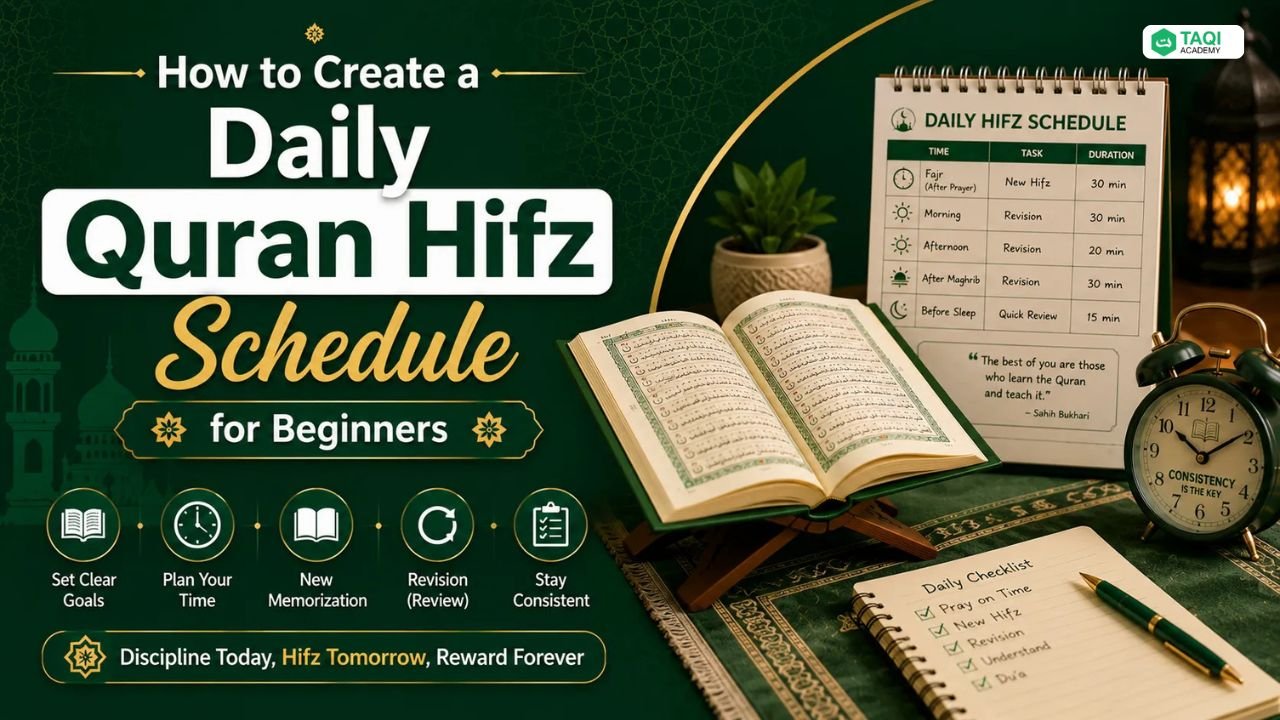
A Beginner’s Daily Hifz Schedule
Here is a simple example of a daily routine.
Session 1: New Memorization
Spend focused time learning your new portion. Read it carefully and repeat it until you can recite it without looking.
Session 2: Recent Revision
Review the portions you memorized during the previous few days.
Session 3: Older Revision
Recite an older section to keep your previous Hifz strong.
Session 4: Teacher Check
Recite your new and assigned revision to your teacher. Your actual schedule may be shorter or longer depending on your age, school, work, family responsibilities, and memorization level.
How Much Quran Should a Beginner Memorize Each Day?
There is no single daily amount that is right for everyone. A beginner may start with a small portion. Another student with strong Quran reading skills may be able to memorize more.
Your teacher should consider:
- Your age
- Reading ability
- Memory
- Available study time
- Current Hifz level
- Revision needs
- School or work schedule
Do not measure your success only by how many pages you memorize.
A better measure is:
How much can I memorize correctly and retain?
How Long Does It Take to Memorize the Quran?
The answer varies from student to student. Taqi Academy’s Complete Hifz page gives different duration information in different parts of the page, including an average estimate of 2–5 years in its FAQ and a 1–3 year course-duration section. This shows why a fixed completion time should not be promised to every learner.
Your timeline can depend on:
- Daily memorization amount
- Revision routine
- Reading ability
- Teacher support
- Consistency
- School or work schedule
- Individual memory
- Time available each day
Some learners progress quickly, while others need more time. There is no shame in taking longer. The quality and retention of your Hifz matter more than finishing within a certain number of months.
Can Adults Memorize the Quran?
Yes. Adults can begin Hifz even if they have work, family, or other responsibilities. The main challenge is usually creating a realistic schedule. Instead of trying to follow a child’s Hifz routine, build a plan around your own daily life.
For example:
Morning: New memorization
Evening: Revision
Weekend: Longer revision session
A flexible program can make this easier.
Taqi Academy’s Part-Time Hifz Program is designed around manageable portions and flexible timing, making it suitable for learners who need to balance Hifz with school, work, or other responsibilities. You can explore the Part-Time Hifz Program if a full-time schedule is difficult for you.
Can Children Start Hifz?
Yes, children can begin Quran memorization when they have the necessary reading foundation and are ready for a consistent learning routine. However, parents should avoid turning Hifz into a source of unnecessary pressure.
Children may need:
- Shorter lessons
- More repetition
- Regular encouragement
- Patient correction
- Age-appropriate goals
- Frequent revision
Parents can also support children by creating a quiet study environment and maintaining a regular routine. Taqi Academy offers Quran learning pathways for children, and its homepage recommends Complete Hifz or Part-Time Hifz for students who want to memorize the Quran. Parents can also read How to Motivate Your Child to Learn Quran Regularly for practical ideas on building a positive Quran learning routine.
What If I Work or Study Full-Time?
You do not have to give up the goal of Hifz because you have a busy schedule. The key is to reduce the daily target and protect your revision time. For example, instead of trying to memorize a large amount every day, you may choose a smaller portion and maintain it consistently.
A Part-Time Hifz plan can be useful for:
- University students
- School students
- Working adults
- Parents
- Busy professionals
Taqi Academy’s Part-Time Hifz program is built around personalized targets, flexible timing, smaller portions, and sustained revision.
Should I Learn Tajweed Before Hifz?
You should have enough Quran reading ability to memorize with correct pronunciation. You do not necessarily need to master every Tajweed rule before beginning Hifz. Taqi Academy states that Tajweed is not mandatory before joining its Hifz program because Tajweed can be taught alongside memorization for beginners. However, memorizing with incorrect pronunciation is not a good practice. If your Tajweed needs improvement, study it alongside your Hifz. The Quran Reading with Tajweed Course can help learners strengthen their pronunciation and recitation skills.
Why Teacher Guidance Matters in Hifz
Quran memorization is not only about memory. You need to know whether your recitation is accurate. A qualified teacher can listen to your recitation and identify mistakes that you may not notice.
A teacher can also help you:
- Set a realistic daily target
- Correct pronunciation
- Test old memorization
- Identify weak verses
- Adjust your revision schedule
- Track your progress
- Stay consistent
When choosing a Hifz teacher or academy, look beyond marketing claims. Check the teacher’s Quranic education, Hifz background, Tajweed knowledge, teaching experience, assessment process, and the level of individual attention provided. Taqi Academy’s own guide on How to Choose the Best Online Quran Academy in Bangladesh recommends checking teacher qualifications and looking for a structured curriculum that includes Noorani Qaida, Tajweed, and Hifz pathways.
Online Hifz vs Traditional Hifz
Both online and in-person Hifz can work well. The better option depends on your circumstances and the quality of teaching available.
Online Hifz can provide:
- Flexible schedules
- One-to-one lessons
- Access to teachers from different locations
- Learning from home
- Easier scheduling for busy students
Traditional learning may provide:
- In-person interaction
- A structured physical learning environment
- Direct supervision
The important question is not simply whether the class is online or offline.
Ask whether the program provides:
- Qualified teachers
- Regular recitation
- Correct Tajweed
- Daily revision
- Oral testing
- Progress tracking
- Individual feedback
Taqi Academy’s Hifz program uses one-to-one online sessions, flexible scheduling, daily revision support, and progress reports. For a broader comparison, you can read Online Quran Learning vs. Traditional Madrasa: Which One Is Better?. The article discusses the strengths and limitations of both approaches.
Common Hifz Mistakes Beginners Should Avoid
Memorizing Too Much
Large daily targets can make revision difficult. Start with an amount you can maintain.
Ignoring Revision
New memorization without revision can lead to forgetting.
Memorizing With Pronunciation Errors
Always check your recitation with a teacher.
Changing Your Schedule Constantly
A stable routine makes consistency easier.
Comparing Your Progress
Every learner has a different pace.
Studying Only When You Feel Motivated
Motivation changes. A regular routine helps you continue even on difficult days.
Forgetting the Meaning
Understanding the basic meaning of what you memorize can help you stay connected to the Quran. For detailed understanding, study translation and Tafseer from qualified teachers or scholars rather than relying on random online explanations.
A 30-Day Beginner Hifz Plan
If you are starting from zero, your first month should focus on building a strong routine rather than trying to memorize a large amount.
Week 1: Build the Routine
Focus on:
- Fixed study time
- Correct Quran reading
- Small memorization target
- Daily revision
- Teacher assessment
Week 2: Improve Consistency
Continue your daily target. Add more attention to difficult words and pronunciation.
Week 3: Strengthen Revision
Begin reviewing older portions more seriously. Do not allow new memorization to take all your study time.
Week 4: Test Your Progress
Ask your teacher to test:
- New memorization
- Previous lessons
- Difficult verses
- Similar passages
Then adjust your next month’s plan. The goal of the first month is to create a sustainable habit.
A Simple Hifz Checklist
Before ending each study session, ask:
- Did I complete today’s memorization target?
- Did I review yesterday’s lesson?
- Did I review older memorization?
- Did I check my pronunciation?
- Did I apply Tajweed?
- Did I recite without looking?
- Did I note any difficult verses?
- Did I receive teacher feedback?
- Do I know what I need to revise tomorrow?
This simple checklist can help keep your Hifz organized.
Final Thoughts
Memorizing the Quran is a long journey, but you do not need to complete it in a single step. Start with a realistic goal. Make sure your Quran reading is accurate. Learn and apply Tajweed. Memorize small portions. Repeat them carefully. Connect the verses. Revise every day. Recite to a qualified teacher. And most importantly, stay consistent. There will be days when you memorize quickly and days when you struggle with a few lines. That is part of the learning process. Do not judge your entire Hifz journey by one difficult day. If you need a structured program with one-to-one lessons, revision support, teacher feedback, and progress assessment, Taqi Academy’s Complete Hifz Program is designed for students who want to memorize the entire Quran.
If you need a more flexible schedule, the Part-Time Hifz Program offers smaller memorization targets and flexible planning for students and working adults.
If you are not ready for Hifz yet because your Quran reading needs improvement, begin with Noorani Qaida or Quran Reading with Tajweed first. Taqi Academy’s current course pathway recommends choosing the course according to the learner’s current level. The goal is not simply to say that you memorized the Quran. The goal is to memorize it carefully, recite it correctly, revise it consistently, and keep your connection with the Quran throughout your life.
Frequently Asked Questions
What is the best way to start memorizing the Quran?
Start by checking your Quran reading level, improving pronunciation and basic Tajweed if needed, choosing a small daily target, and creating a consistent memorization and revision routine.
How much Quran should I memorize each day?
There is no universal amount. Your daily target should depend on your reading level, memory, available time, and ability to revise. A smaller amount that you retain well is better than a large amount that you quickly forget.
Can I memorize the Quran without knowing Tajweed?
You do not need to know every Tajweed rule before starting Hifz, but you should work toward correct pronunciation. Taqi Academy teaches Tajweed alongside memorization for beginners who need it.
How long does it take to memorize the Quran?
It varies from person to person. Your daily target, revision routine, reading level, teacher support, and available time all affect the timeline. A fixed completion date should not be promised to every student.
Can adults memorize the Quran?
Yes. Adults can memorize the Quran by using realistic daily targets and a schedule that fits their work and family responsibilities. A part-time program can be useful for people with limited time.
Can children start Quran memorization?
Yes, children can begin Hifz when they have a suitable reading foundation and are ready for regular practice. Their goals should be appropriate for their age, with enough repetition and encouragement.
Is revision really necessary during Hifz?
Yes. Revision is a central part of memorization. As the amount of memorized Quran increases, regular review becomes increasingly important for retention. Taqi Academy’s Hifz program includes daily revision and longer-term retention strategies.
Should I memorize the Quran online or in person?
Both can work when the program provides qualified teachers, regular recitation, Tajweed correction, revision, testing, and progress tracking. Your choice should depend on your circumstances and the quality of instruction available.
What should I do if I keep forgetting what I memorized?
Reduce your new memorization temporarily and increase revision. Ask your teacher to identify weak portions and create a revision plan. Forgetting can happen during a long Hifz journey, so regular review is essential.
Can I memorize the Quran while working or studying?
Yes. A part-time Hifz schedule can help students and working adults balance memorization with other responsibilities. The key is to choose a manageable target and remain consistent. Taqi Academy’s Part-Time Hifz program is designed around flexible timing and smaller portions.